Sri Lanka's tourism industry is often celebrated for its landscapes, wildlife, beaches, and history but behind the postcards are independent guides, researchers, educators, and local experts who rarely receive enough visibility. Many of these professionals carry years of cultural knowledge and field experience, yet still struggle with unstable income, lack of digital access, and heavy dependence on intermediaries. For women especially, entering field-based tourism and expedition guiding can still be deeply challenging.
Being a travel guide in Sri Lanka is already unpredictable work. Income depends heavily on seasons, cancellations, tourist demand, weather conditions, and platform visibility. For women, those pressures are often multiplied by social expectations, safety concerns, credibility barriers, and limited access to professional networks dominated by men. And yet, despite all of that, many continue to build careers through resilience alone. What stood out during conversations with Priya was not frustration. It was endurance
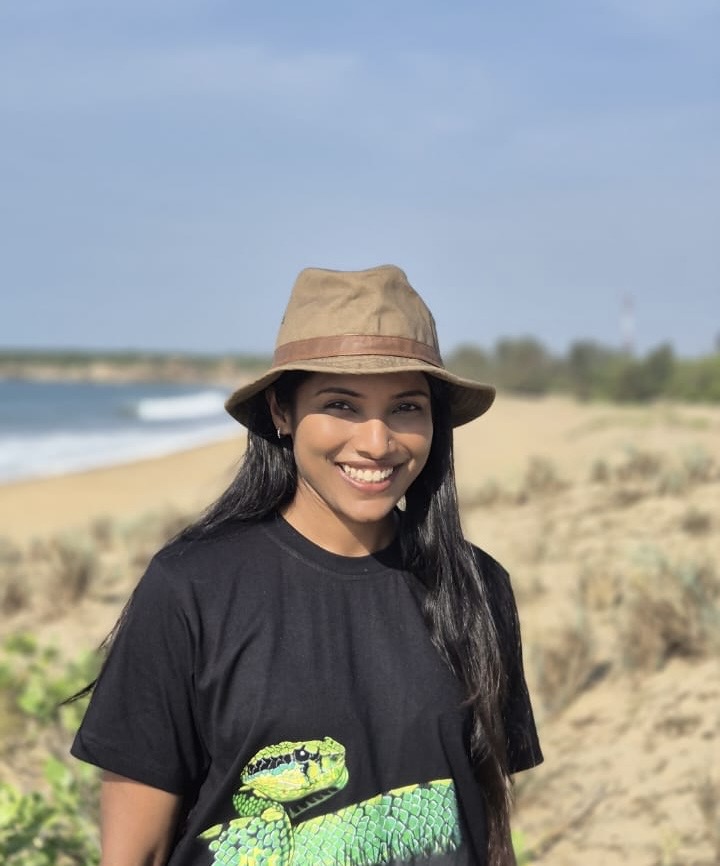
As part of Raahi's early onboarding and MVP testing process, we spoke with one of the newest women joining the Raahi expert network a cultural and nature-focused travel professional whose work spans archaeology, heritage interpretation, biodiversity, and conservation. Her perspective offers an honest look at both the beauty and the realities of working in Sri Lanka's tourism industry today.
What inspired you to become a travel guide in Sri Lanka, especially in an industry where very few women take this path?
"My inspiration to become a travel professional started during my childhood. Because of my parents' jobs, I grew up around archaeological and historical places in Sri Lanka. From a young age, I had the opportunity to see travelers visiting these sites, listening to stories, learning history, and enjoying the cultural beauty of the country. Watching their curiosity and happiness inspired me deeply."
"I also had the chance to interact with many educated people, researchers, academics, travelers, and professionals from different backgrounds. Those experiences helped me develop my communication skills, confidence, and passion for knowledge-sharing. Over time, my interest expanded not only toward culture and history, but also toward archaeology, biodiversity, wildlife, conservation, and heritage interpretation."
What were some of the biggest challenges you faced when starting your journey as a female travel professional?
"One of the biggest challenges was gaining professional recognition in an industry where women are still underrepresented, especially in field guiding and expedition-based tourism. Even today, this profession is still very male-centered in Sri Lanka."
"There were moments when people underestimated my abilities simply because I am a woman. Sometimes people assumed women could not handle fieldwork, leadership responsibilities, long expeditions, or challenging travel conditions."
Do you think local experts and guides in Sri Lanka receive enough visibility and opportunities through existing tourism platforms?
"No, I do not think local experts, independent guides, cultural experts, and researchers receive enough visibility through existing tourism platforms in Sri Lanka. Most platforms focus on large companies and mass tourism products."
"However, many independent professionals like cultural guides, archaeologists, nature educators, and community-based tourism providers offer deep and authentic experiences, but they are often not seen or promoted enough."
How important is trust and reputation when working with international travelers?
"Trust and reputation are extremely important when working with international travelers. Travelers are not only buying a tour; they are trusting a person with their safety, learning experience, and time."
"Building that trust online is challenging for independent professionals because we do not always have strong marketing systems like large companies. We depend on honest communication, reviews, personal connections, and consistent professionalism."
What role do language barriers, technology access, or digital tools play in tourism work today?
"Language barriers, technology access, and digital tools play a very important role in daily tourism work. Many local experts have strong knowledge in culture, archaeology, and nature, but they may struggle with English communication or digital platforms."
How dependent are local guides and experts on intermediaries or commissions to find work?
"In Sri Lanka, many local guides and experts still depend heavily on intermediaries, travel agents, or commission-based systems to get work. This reduces their independence and income."
"Even highly skilled professionals in archaeology, culture, and nature guiding often receive limited direct access to travelers, which affects fair income distribution."
What changes would you like to see in the future of Sri Lanka's tourism industry?
"I would like to see a more inclusive and balanced tourism industry in Sri Lanka. Independent guides, women professionals, cultural interpreters, archaeologists, and conservation educators should have more direct access to travelers."
"Tourism should support sustainability, education, and community participation — not only commercial growth. Women should also have safer and stronger opportunities in field-based tourism."
What made you interested in joining Raahi's early onboarding and MVP testing process?
"I became interested in joining this MVP testing process because I believe digital platforms can create meaningful opportunities for independent tourism professionals."
"These platforms can help connect travelers directly with local experts, researchers, guides, and community-based experiences. I hope such platforms will support fair visibility, reduce dependency on intermediaries, and encourage more authentic and responsible tourism."
Have you ever felt underestimated or treated differently because you are a woman?
"Yes, of course. At the very beginning of my career as a travel professional, I was very young in age and also appeared young in my outlook. I was still building my confidence and experience in the field."
"One reputed company in Sri Lanka interviewed me and even gave me training, but initially they were hesitant to assign me tours. The common comments were that I looked 'too young' or 'too small' and therefore might not be able to handle large groups or challenging situations. These judgments were based on appearance rather than my actual ability or potential."
How did those experiences affect your confidence and career?
"At first, these experiences of being underestimated affected me, but over time they became a strong motivation in my life."
"Instead of stopping me, they pushed me to improve myself. I focused on education, training, and professional development in tourism, archaeology, and guiding skills. I realized that I could not change my appearance, but I could strengthen my professionalism, knowledge, and experience."
What is the hardest part about building long-term financial stability as an independent travel professional in Sri Lanka?
"The hardest part is the high level of uncertainty in the industry. Income is strongly influenced by seasonal tourism patterns, global economic changes, political situations, and unexpected disruptions such as travel restrictions or crises."
"Many skilled local guides, cultural interpreters, and researchers do not have the same digital reach or platform support as larger companies. This makes it challenging to maintain consistent income and long-term financial security, even with strong expertise and experience."
If nothing changes in the tourism industry over the next 10 years, what do you think will happen?
"If there are no meaningful changes in the next 10 years, Sri Lanka's tourism industry will face serious long-term consequences."
"Many trained and certified guides who invested time and effort to become professionals have already had to leave the industry because they could not sustain stable income. In the long term, the country risks losing experienced guides, cultural interpreters, and local experts who are essential for authentic tourism experiences."
At Raahi, these are exactly the voices we hope to amplify independent professionals, local experts, and people building meaningful tourism experiences from the ground level. As we continue building the platform, conversations like this remind us that the future of travel is not just about destinations. It is about people.